
If your WooCommerce cart or checkout is broken, the issue should be treated as a store-critical problem from the start. A broken cart or checkout interrupts the path from product interest to completed order. In many cases, the store may still look normal on the surface, but the core buying flow is already failing. That means customers can browse products and even add items, but they cannot complete the purchase normally.
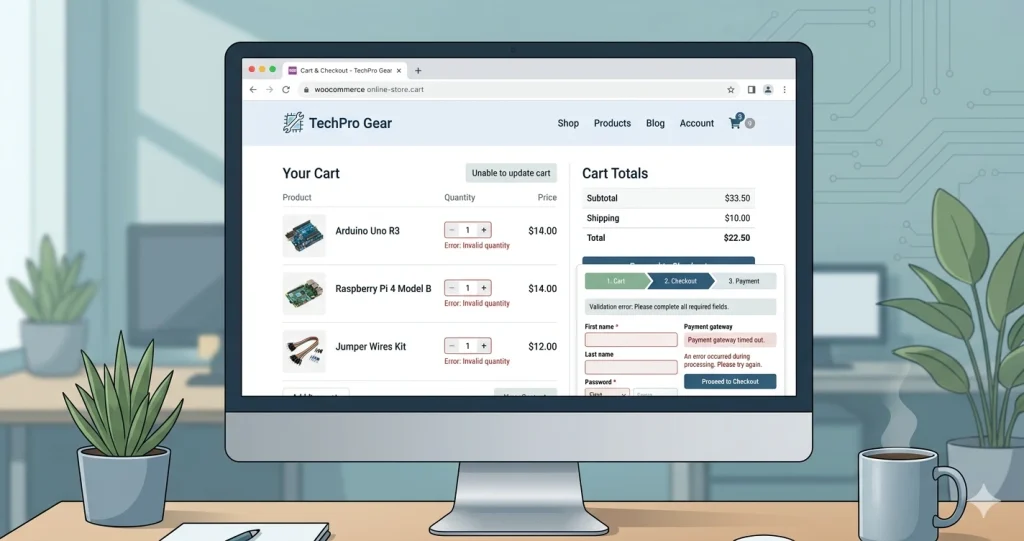
When WooCommerce cart or checkout is broken, the cause is often deeper than one visible symptom. The problem may sit in payment gateways, plugin conflicts, theme compatibility, checkout scripts, shipping logic, tax rules, cached assets, update-related mismatches, server-side problems, or suspicious security behavior. The first goal is not to guess. The first goal is to narrow down where the flow breaks and what changed before it stopped working.
What it usually means when WooCommerce cart or checkout is broken
When WooCommerce cart or checkout is broken, the purchase journey is no longer reliable. Sometimes the cart does not update properly. Sometimes customers can reach checkout but the page fails during validation, shipping calculation, payment submission, or order creation. In some cases, the cart breaks first and the checkout never gets a chance to work at all.
This kind of issue often appears after WooCommerce updates, plugin changes, payment gateway changes, theme edits, frontend script conflicts, shipping/tax adjustments, or store-specific customizations. Even when the homepage and product pages still look fine, the commercial core of the store may already be broken.
Common signs that WooCommerce cart or checkout is broken
The problem does not always appear in the same way. Some stores show obvious failures, while others break only in one part of the order flow.
- The cart does not update after quantity changes
- Products cannot be added to cart correctly
- The cart page loads but behaves inconsistently
- The checkout page fails to load fully
- The place order button does nothing
- Checkout fields fail validation incorrectly
- Shipping or totals behave incorrectly during checkout
- The order is not created after a payment attempt
- The issue started right after a WooCommerce, plugin, theme, or WordPress update
One of the most useful clues is whether the cart is broken, the checkout is broken, or both are broken together. That distinction often helps narrow the technical cause much faster.
Why WooCommerce cart or checkout gets broken
Plugin conflicts
This is one of the most common causes when WooCommerce cart or checkout is broken. Stores often rely on multiple plugins for coupons, payment gateways, shipping, analytics, product options, subscriptions, taxes, and custom checkout fields. A conflict between any of these layers can break the order flow.
Theme and template compatibility issues
Custom theme templates or outdated WooCommerce overrides can break cart rendering, checkout forms, totals logic, refresh behavior, or button actions after a recent update.
Checkout-specific problems
If the cart still works but the order fails once the customer reaches checkout, the issue may be more checkout-specific. In that case, review the guide on WooCommerce checkout not working to narrow down checkout fields, validation, scripts, gateway behavior, and order creation issues.
Payment gateway and checkout extension problems
Even if the cart works normally, checkout can fail when the payment plugin, fraud system, subscription extension, or checkout extension no longer matches the updated store environment. If the problem mainly appears during payment, the related guide on WooCommerce payments fail after update may be more specific.
JavaScript and frontend script issues
Cart and checkout often rely on scripts for updating totals, validating fields, refreshing fragments, and handling payment actions. If those scripts fail, load out of order, or are cached incorrectly, the visible result can be a broken cart or checkout flow.
Shipping, tax, and totals logic problems
Sometimes the cart or checkout is broken because a shipping rule, tax configuration, or totals-related plugin interrupts the flow before payment is even reached. If the issue is tied to missing shipping methods, wrong tax, or inconsistent totals, see the guide on shipping or tax not working in WooCommerce.
WooCommerce cart or checkout broken after update is common when WooCommerce itself, an extension, the theme, WordPress core, or the server environment changed and introduced a compatibility mismatch.
Malware, viruses, or suspicious checkout behavior
Malware and viruses are not the most common cause of a normal cart issue, but they should be considered if the store redirects unexpectedly, unknown scripts appear near checkout, payment screens look suspicious, or cart behavior changes without a clear update or configuration reason.
What to check first when WooCommerce cart or checkout is broken
The first checks should help isolate whether the issue is cart-specific, checkout-specific, payment-related, shipping/tax-related, security-related, or tied to the broader store environment.
1. Confirm what changed recently
If the issue started after a WooCommerce update, plugin update, theme update, WordPress update, payment gateway change, shipping/tax rule change, cache change, or server change, that recent change is the first place to investigate.
2. Check whether the cart is broken, the checkout is broken, or both
A cart page that fails before checkout is different from a checkout page that fails during validation, payment submission, shipping calculation, or order creation. The affected step matters.
3. Review what part of the flow stops working
Does the problem happen during add to cart, cart update, coupon use, shipping calculation, checkout validation, payment submission, or order creation? That helps narrow the likely cause.
4. Check plugin, extension, and theme interactions
WooCommerce cart or checkout is often broken because multiple systems overlap in the same flow. The root issue may involve more than one plugin or a combination of plugin and theme behavior.
5. Check cache, optimization, and stale scripts
Cached assets, JavaScript optimization, CDN layers, object cache, or stale fragments can make the cart or checkout appear broken even when the main store setup looks mostly unchanged.
6. Check shipping, tax, and totals behavior
If totals change unexpectedly, shipping methods disappear, tax behaves inconsistently, or coupons break the flow, the issue may be tied to cart calculation rather than checkout submission alone.
7. Watch for suspicious behavior
If checkout redirects unexpectedly, unknown scripts appear, or customers report unusual payment or cart behavior, malware or viruses should be considered as possible causes.
What not to do right away
- Do not update more plugins or extensions just to see whether the issue changes
- Do not switch multiple checkout, payment, shipping, or tax settings at once without tracking them
- Do not assume the payment gateway is the only cause if the cart is also unstable
- Do not keep testing risky changes during live store traffic if orders are already affected
- Do not ignore the possibility of theme overrides or custom code involvement
- Do not ignore malware or viruses if cart or checkout behavior looks suspicious or unsafe
When WooCommerce cart or checkout is broken, uncontrolled changes usually make the real cause harder to isolate and can extend the store outage.
When a broken cart or checkout becomes urgent
A broken cart or checkout becomes urgent as soon as it affects live orders, blocked payments, or customer trust. In most practical cases, if WooCommerce cart or checkout is broken, the issue is already urgent because the store can no longer convert active buying intent properly.
- Customers cannot add products to cart reliably
- Customers can add to cart but cannot complete checkout
- The place order step fails during active traffic
- Shipping or totals stop customers from checking out
- The problem appeared during a sale, campaign, or launch period
- Checkout behavior appears suspicious, unsafe, or inconsistent
If live store revenue is already being affected, see the Emergency Website Bug Fix service.
When to get direct WooCommerce troubleshooting help
A broken cart or checkout often means the issue is not limited to one visible error. It may involve plugin conflicts, theme compatibility, payment gateways, shipping logic, checkout scripts, cached assets, security concerns, or custom store behavior all at once.
If WooCommerce cart or checkout is broken and the cause is not immediately obvious, structured troubleshooting is usually safer and faster than continued trial and error. For store-specific help, see the WooCommerce Bug Fix service.
Need help with this WooCommerce cart or checkout issue?
If cart updates, checkout, payment, shipping, tax, or order flow is broken, PHP Rescue can help troubleshoot the store issue and restore the affected workflow.
Frequently asked questions
Why is WooCommerce cart or checkout broken after an update?
In many cases, WooCommerce cart or checkout is broken after an update because a plugin, theme override, payment extension, shipping/tax rule, cached script, or custom store logic no longer matches the updated environment.
Can WooCommerce cart or checkout be broken even if product pages still work?
Yes. A store can look mostly normal while the cart or checkout flow itself is broken underneath, especially when the issue sits in scripts, totals logic, shipping, tax, or payment processing.
Can caching make WooCommerce cart or checkout look broken?
Yes. Cached fragments, stale scripts, object cache, CDN cache, or aggressive frontend optimization can break cart refreshes, totals updates, checkout validation, or payment submission behavior.
Can shipping or tax problems break cart and checkout?
Yes. Shipping methods, tax rules, product classes, coupons, and totals-related extensions can break the cart or checkout flow before payment is reached.
Can malware or viruses affect WooCommerce cart or checkout?
Yes. Malware, viruses, injected scripts, suspicious redirects, or altered checkout files can affect cart behavior, checkout safety, payment trust, and customer experience.
If WooCommerce cart or checkout is broken, the most useful response is structured troubleshooting. The priority is to identify what changed, narrow down which part of the order flow is failing, check for suspicious behavior when needed, and decide whether the issue is safe to inspect further or already urgent enough to need direct technical help.